
The week before a move is rarely calm. There are a hundred decisions to make, and packing materials is one that most people leave too late — then panic-buy at the closest servo or find themselves wrapping wine glasses in old t-shirts at midnight. We've seen it plenty of times across nearly four decades of helping South Australians and Central Australians store and move their belongings.
This guide is the honest version: what you actually need, what's genuinely optional, and what's a waste of money. Whether you're clearing out a family home in Burnside, packing down a flat in Morphett Vale, or preparing a storage unit in Alice Springs before a long stint away, the same principles apply — good packing protects your things and makes unpacking less of an ordeal.
Packing materials for moving: what you actually need
Let's start with the non-negotiables — the materials that do real work and earn their place in your move.
Boxes: the foundation of every good move
Not all boxes are equal. The single most common packing mistake we see is using whatever's available — old wine cartons, fruit boxes from the supermarket, whatever the bottle shop had out the back. These boxes are engineered for their original purpose, not for stacking under weight during a move.
What to look for in a moving box
- Double-walled cardboard for anything heavy — books, kitchenware, tools. Single-walled boxes collapse under load.
- Consistent sizing so boxes stack properly in a van or storage unit without wasting vertical space.
- Undamaged bases — inspect every box before loading. A wet or previously crushed base is a failure waiting to happen.
Sizing guide
- Small boxes (book boxes) — heavy items only: books, tools, canned goods, records. Keep them light enough to carry one-handed.
- Medium boxes — the workhorse of any move. Kitchen items, clothing, toys, electronics.
- Large boxes — strictly for light, bulky items: linen, pillows, lampshades. Never heavy items — they become impossible to move safely and the base may give way.
- Wardrobe boxes — tall boxes with a hanging rail, useful if you have a lot of hanging clothes you don't want to fold and re-iron.
Self Storage Australia tip: Buy slightly more boxes than you think you need. Running out mid-pack is far more stressful than having a few left over — unused boxes can be broken flat and recycled, or passed on to someone else moving. Browse our box shop directory for supplies before you start.
Tape: the detail most people get wrong
Packaging tape is not all the same, and the wrong tape is one of the most common causes of boxes failing mid-move. What to use and what to avoid:
- Use: heavy-duty packing tape (48mm or wider) — the brown or clear polypropylene tape sold specifically for packing. Apply at least two runs along the base seam and two across the joins.
- Avoid: masking tape — it simply isn't strong enough for box bases under load.
- Avoid: duct tape for boxes — strong, but it doesn't grip cardboard reliably and can peel away in the heat. In an Alice Springs summer, this matters.
- A tape gun is worth buying or borrowing. Trying to tear packing tape by hand for an entire house is slow and frustrating.
Alice Springs note
Extreme heat affects adhesive. In summer, tape stored in a hot vehicle or shed may lose grip. Keep your tape roll cool and apply it to room-temperature boxes where possible.
Packing paper and wrapping materials
This is where people most often try to save money — and where they most often regret it when they unpack. The job of wrapping material is to create a buffer between hard surfaces. Here's the hierarchy:
Packing paper (newsprint)
Unprinted newsprint or clean packing paper is your primary wrapping material. It's cheap, lightweight, flexible, and effective for most crockery, glasses, and general kitchenware. It also doubles as void fill — crumple it loosely to fill space in boxes and stop items shifting.
Note on newspaper: Actual printed newspaper works in a pinch but leaves ink on items. Fine for pots and pans, but avoid it on anything light-coloured, porous, or sentimental.
Bubble wrap
Genuine bubble wrap earns its place for a specific set of items — anything fragile, irreplaceable, or expensive. Think: wine glasses, picture frames, ceramic pieces, ornaments, mirrors. For the rest of your kitchen, packing paper is sufficient and considerably cheaper.
Foam wrap / foam sheets
A step up from bubble wrap for certain items. Thin foam sheeting is particularly good for protecting finished surfaces — framed artwork, screens, instrument bodies — without the bubble pattern imprinting on delicate surfaces.
Markers and labels
This sounds obvious. It is genuinely underestimated. Unlabelled boxes are one of the primary causes of move-related stress — you've arrived at your new place in Modbury or Port Augusta, it's 9pm, and you cannot find the kettle.
- Use a thick permanent marker (Sharpie or equivalent) — it needs to be readable across a van.
- Label every side of each box, not just the top. Boxes get stacked; the top becomes inaccessible.
- Include room destination and contents ("Kitchen — pots and lids, spice rack") not just the room.
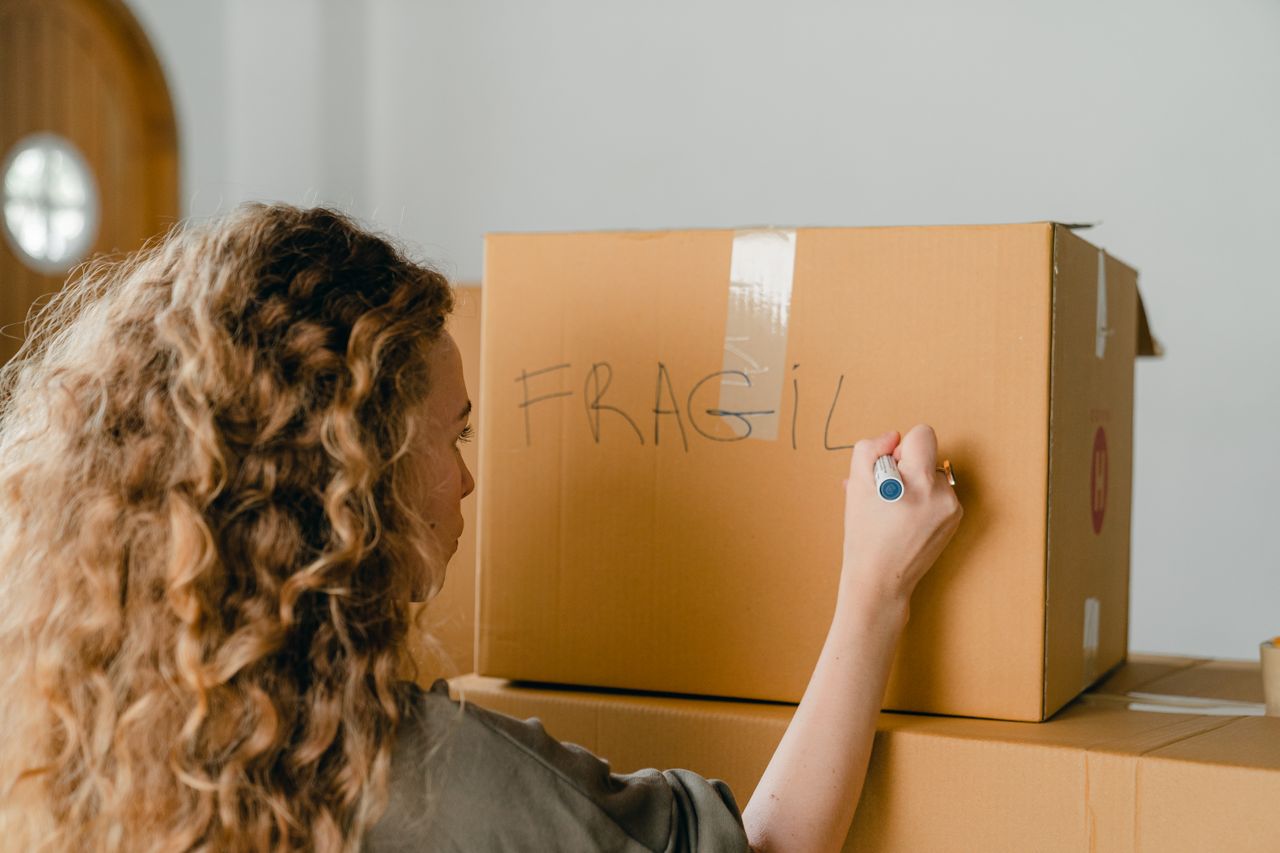
- Mark any box containing fragile items on all visible sides.
Specialty items worth having
Mattress bags
A fitted plastic bag for your mattress costs a few dollars and protects against dust, moisture, and scuffs during transit. If your mattress is going into storage rather than directly to a new address, this is particularly worthwhile — dust accumulates in storage units even in the best facilities.
Furniture blankets / moving blankets
For any furniture with a finished surface — dining tables, timber furniture, chest of drawers — a furniture blanket prevents scratches during transit. Most furniture removalist companies include these, but if you're hiring a van yourself, either hire blankets or use your own thick blankets and doonas.
Stretch wrap / cling wrap
The large rolls of industrial stretch wrap are surprisingly useful. They hold drawers closed in dressers, keep doors from swinging open on cabinets, bundle flat items like shelving panels, and protect upholstered furniture from surface dirt. Not essential, but once you've used it on a move, it's hard to do without.
Zip-lock bags
Indispensable for hardware — the screws and bolts from disassembled furniture. Tape the bag directly to the piece of furniture it came from. Future-you, trying to reassemble a bookcase in a new living room in Salisbury, will appreciate this enormously.
What you don't need to buy
The packing materials industry is not short of products that sound useful. Here's what's genuinely optional or outright unnecessary for most moves:
| Item | The honest verdict |
|---|---|
| Dish packs / cell boxes | Cardboard dividers for glasses and bottles. Useful if you have a lot of glassware, but packing paper achieves the same result with more flexibility. Skip unless you're packing a bar or large collection. |
| Coloured label systems | Colour-coded room labels look organised but add complexity. A clear written label is faster to apply and easier to read. Skip. |
| Speciality foam corner protectors | For most moves, bubble wrap or a folded moving blanket achieves the same result. The exception: if you're moving fragile artwork or high-value furniture regularly. |
| Packing peanuts | Messy, hard to dispose of, and crumpled packing paper does the same job. Not recommended. |
| Custom crating | Only relevant for extremely high-value items — art, antiques, instruments. If you need this, you already know it. |
Your packing materials checklist
Use this before you start packing — not the night before the truck arrives.
- Small (book) boxes — for heavy items
- Medium boxes — general packing workhorse
- Large boxes — light, bulky items only
- Heavy-duty packing tape (48mm+)
- Tape gun
- Packing paper / unprinted newsprint
- Bubble wrap — fragile items only
- Thick permanent markers
- Zip-lock bags (for hardware)
- Wardrobe boxes (hanging clothes)
- Mattress bags
- Furniture / moving blankets
- Stretch wrap / cling wrap
- Foam wrap sheets (screens, art)
- Scissors or box cutter
- Coloured dot stickers (fragile marking)
- "Do not stack" labels
Packing for storage vs. packing for a direct move
If your belongings are going into a storage unit — rather than straight to a new address — there are a few extra considerations worth building into your packing approach.
- Label for retrieval, not just destination. When packing for storage, you may need to find specific items months later. Label boxes with contents lists detailed enough that you can locate something without unpacking three other boxes.
- Consider long-term moisture. Adelaide's coastal humidity and Alice Springs' dramatic seasonal temperature swings can both affect contents over time. Sealed plastic tubs for fabric items, electronics, or anything moisture-sensitive are worth the extra cost for longer storage periods.
- Wrap furniture properly. Items sitting in storage for weeks or months need more protection than items in transit for a few hours. Use furniture blankets or similar coverage, and avoid wrapping timber furniture in plastic — plastic traps moisture against the surface.
- Don't store food. Any food item — even canned goods — can attract pests. Decant to another location before anything goes into your unit.
Self Storage Australia tip: Create a simple inventory list as you pack for storage — even a note on your phone of what's in each numbered box. Pair it with the labels on the boxes themselves. It takes ten minutes and saves hours of searching later.
You can browse our storage centres in Adelaide and Alice Springs — our team is also happy to answer questions about what unit size suits the volume of items you're storing.
Where to source packing materials in Adelaide and Alice Springs
A few practical options beyond the obvious:
Adelaide
- Removal companies often sell boxes and supplies directly, sometimes with a buyback on unused boxes. Worth asking.
- Bunnings, Officeworks, and storage specialists stock a reliable range of tape, paper, and basic boxes.
- Facebook Marketplace and local community groups — people who've recently moved frequently give away quality boxes. Search your suburb or surrounding areas like Prospect, Glenelg, Salisbury, or the Barossa if you're in the northern suburbs or outer metro areas.
- Your storage facility — some self storage operators sell or stock packing materials on-site. Check our box shop directory for what's available.
Alice Springs
- Supply options are more limited than a capital city, which means planning ahead matters more. Order online with enough lead time, or check local hardware and general stores.
- If you're relocating to or from Alice Springs from interstate, factor in transit time for any materials ordered from southern suppliers. A week's buffer is sensible during busy periods.
- Our storage facility — our self storage locations stocks packing materials on-site. Check our box shop directory for what's available.
Frequently asked questions
How many boxes do I need for a house move?
A rough guide: studio or one-bedroom — 20 to 30 boxes; two-bedroom — 35 to 50 boxes; three-bedroom — 55 to 80 boxes. These are starting points only — kitchen-heavy homes and significant book collections push numbers up significantly. When in doubt, buy more than you think you need. See our box shop directory for sizing and supply options.
Is it worth buying new boxes or are secondhand fine?
Secondhand boxes are fine with caveats: check the base carefully for water damage or crush marks, avoid boxes that smell of food or chemicals, and never use boxes that have held cleaning products. Double-walled new boxes are worth the cost for anything heavy or fragile.
Can I use plastic tubs instead of boxes?
Yes, and for storage purposes they're often better — particularly for items that will sit in a unit for an extended period. They stack well, protect against moisture, and make inventory easier since you can see what's inside. They're heavier and bulkier to transport, so a mix of tubs for storage items and boxes for the direct move is a sensible approach.
What's the best way to pack fragile items?
Wrap each item individually in packing paper first, then add a layer of bubble wrap for anything fragile. Pack heavy items at the base of the box, lighter items on top. Fill all void space with crumpled paper — items should not be able to move inside the box when you shake it. Mark the box on all visible sides as fragile.
How do I pack for storage in Alice Springs given the heat?
Heat is a real consideration. Avoid storing anything heat-sensitive (candles, vinyl records, aerosols, certain electronics) without considering the temperature range your unit will reach. Sealed plastic tubs provide some protection. Speak to our team about unit options — some storage facilities have options better suited to temperature-sensitive items.
The bottom line
Good packing materials don't need to be expensive — they need to be appropriate. The difference between a stressful move and a manageable one usually comes down to preparation: having the right boxes, enough tape, enough wrapping material, and enough time to do it without cutting corners at 11pm.
We've been helping Australians move and store since 1986, and the fundamentals haven't changed. The best packing job is the one you're not still thinking about three months later.
Ready to sort your storage? Visit our storage centres page to find a location in Adelaide or Alice Springs, or browse our box shop directory for boxes and packing supplies — and get in touch with our team if you have questions about sizing, access, or what works best for long-term storage.